
绣春刀
China vows to share innovation gains to bolster Asia-Pacific food security_我的网站

一 | TOKYO -- Japan's exports climbed 4.3% in September from a year earlier as shipments of vehicles, machinery and electronics rose while imports of oil and gas fell sharply, the government said Thursday.Exports totaled 9.2 trillion yen ($61 billion) in September while imports fell 16.3% from the year before to 10.9 trillion yen ($72 billion), according to provisional customs data released Thursday. That left a positive balance of 62.4 trillion yen ($410 billion), the first monthly trade surplus in three months.September's increase in exports was the biggest gain since March and was stronger than analysts had expected. The figures suggest strong activity in Japan's vital manufacturing sector despite faltering global demand. Economists said the drop in imports was mainly due to base effects from the year before.In the first half of Japan’s fiscal year, from April-September, exports edged up just 1.4% from a year earlier, to a record 50.2 trillion yen ($330 billion) while the trade deficit shrank by three-quarters to 2.7 trillion yen ($18 billion). Trade with the rest of Asia has weakened in the past half-year, with a drop in exports of computer chips and semiconductor making equipment taking a toll on exports to China.“The global electronics slump seems like it is continuing with semiconductor equipment down 14.5%, contributing to a decline in exports to China, the biggest destination of IT products,” ING Economics said in a report. Shipments to the U.S. and Europe rose, mainly thanks to strong sales of autos and auto parts, which jumped nearly 24%. Exports of electrical equipment surged 17% and exports of machinery were up 18%. Japan's imports of oil fell 28% in April-September from a year earlier, while imports of liquefied natural gas sank almost 38% and imports of coal plunged 37%.。
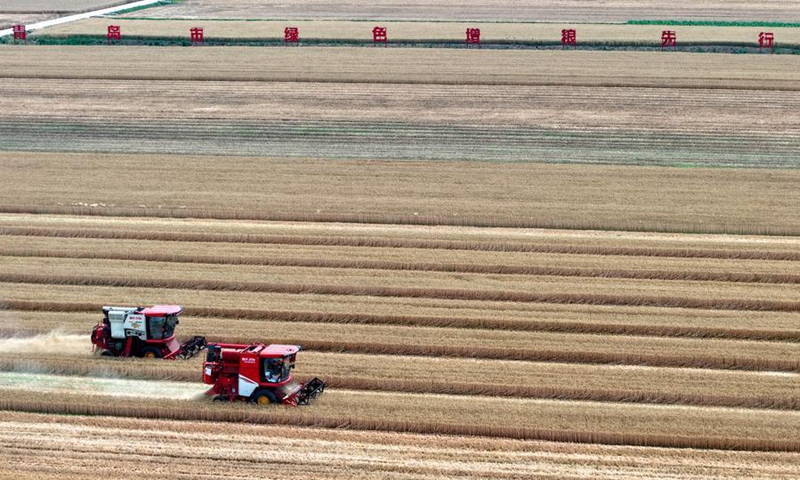
China will promote inclusive sharing to ensure that the benefits of innovation in food security are shared more widely and fairly among Asia-Pacific economies and their people, according to the National Food and Strategic Reserves Administration.
Liu Huanxin, head of the administration, put forward proposals on food security, a shared concern among Asia-Pacific economies, at the APEC high-level public-private dialogue on food security on Thursday.
Stressing the importance of digital empowerment, he said China will promote the large-scale application of innovation across the food supply chain and expand the use of artificial intelligence, digital technologies and smart processing across this sector.
He also called for closer cooperation among government departments, businesses, research institutions and international organizations to promote open and mutually beneficial cooperation in food security.
During the 14th Five-Year Plan period (2021-2025), China kept its domestic grain market broadly stable and deepened international cooperation in the food sector, contributing to food security across the Asia-Pacific and beyond, the official noted.
Over the next five years, China will continue to enhance its overall food production capacity and strengthen its ability to safeguard national food security, he said.
The dialogue, held in the coastal city of Dalian in northeast China's Liaoning Province on Thursday, drew nearly 150 representatives from government departments, business associations, research institutions and international organizations of APEC economies.
。
Current article:http://jfp733a.ningshunsaotuiqiao.shop/list_h5bamug/6oxpp.html
Published on:06:20:01


1
江苏:鼓励生物医药企业围绕新产品研发、新技术应用、新业务布局等积极增资扩产2
Thrilljoy公布《小丑回魂:欢迎来到德里》潘尼怀斯手办,主打“恐怖可爱”风3
英雄联盟的新英雄解放者塞拉斯宣布,他可以复制敌人的大计。4
董明珠:格力将继续坚持分红。个人从未卖出股票。5
台湾22县市将全数参展2026东莞台博会,台湾22县市将全数参展2026东莞台博会6
11人签表太揪心!国乒喜忧参半,谁能杀出死亡之组7
中国印尼全面战略对话机制举行首次会议8
博主直播激活iphone14被封禁,这人也太勇了,经销商得倒大霉_iPhone_Pro9
运河献血屋 焕新启用10
杰伦·布伦森谈尼克斯揭幕战打勒布朗·詹姆斯的76人队:当然兴奋11
货拉拉接单后爽约致司机耗2小时还反遭投诉求平台赔偿损失12
抚顺县开展燃气安全专项整治工作13
阿里扎:08年输绿军球迷摇晃大巴 科比却盘算复仇14
健适外科"睿志Ultra智能腔镜吻合器"获批15
美媒预测新赛季东部战绩变化:76人热火将获提升
- 随机推荐
1
Ecuadorian President Daniel Noboa to visit China2
这个防过敏“神器”火了!医生提醒→3
Paris Club backs SL on ending crisis4
全球500余支队伍聚深圳角逐合成生物学创新赛决赛,全球500余支队伍聚深圳角逐合成生物学创新赛决赛5
韦东奕主编练习册,迫于压力下架?6
这十年,奥运给伦敦留下哪些遗产7
奥克兰海域女尸案:死者身份仍不明,警方寻求公众协助8
从种到画、从“药用+观赏”到美食 牡丹完备产业链助农增收有妙招9
除了LABUBU和运气,泡泡玛特还有什么?,除了LABUBU和运气,泡泡玛特还有什么?10
阿根廷刚宣布“盈利”,国内就爆发全国罢工,到底谁“赚钱”了?11
Mac动态壁纸软件超实用,4K动态高清图千千壁纸大放送12
Bangladesh's Gaibandha bypolls stopped: Poll body13
博伦智汇宣布完成千万级天使轮融资14
8个月大家猫叼回近1米长的蛇,女主人吓得夺门而逃,孩子光脚差点踩到;众人用工具捕获后将蛇放生河道15
深耕Token工厂赛道 硅基流动以技术与流量构筑AI算力服务新生态